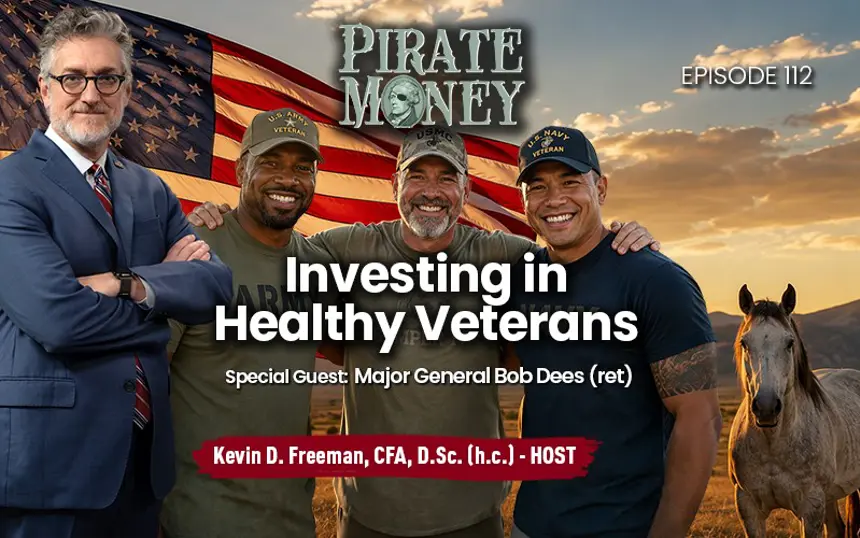
Pirate Money Radio welcomes retired U.S. Army Major General Bob Dees
Kevin Freeman: So far this year, we've had America Reads the Bible from Washington, D.C. that was April 18th through 25th, Genesis to Revelation, read by notables at the Museum of the Bible, such as Dr. Ben Carson, speaker of the House, Mike Johnson, and even the President. Then we had the May 17 rededicate 250 where leaders again gathered in D.C. at an official gathering on the national mall. This was 250 years to the day from when our nation first made this dedication, even before the Declaration of Independence. And we just celebrated Memorial Day, and we look forward to the Fourth of July, our nation's official 250th birthday. This is quite a year. It's a time to be patriotic. It's a time to reflect. And, and I'm joined in studio by my wife, best friend of the past three decades, the incomparable Marnie.
Marnie Freeman: Welcome.
Marnie Freeman: Well, thank you for having me again. I love being on here with you, sweetheart.
Kevin Freeman: It's so good to have you. And we're honored to welcome a true American hero, a longtime friend, Major General Bob Dees, U.S. army retired. General Dees is an expert on strategy, but also a man of faith. He once served as campaign manager for our mutual friend, Dr. Ben Carson. Mark, Marnie and I visited his incredible work at Valor Farm. General, welcome.
Marnie Freeman: Oh, it's good to be with both of you and particularly to see Marnie today.
Marnie Freeman: Oh, it's fun. So, General Deas, I mean, it is such a joy to have you with us today. Kevan and I were deeply moved when we got to visit Valor Farm. It was stunning. And we want to know more. We want our listeners to know more. So this is a lot to ask and to pack in, but can you share your journey from West Point and 31 years of distinguished service, and combining the 2nd Infantry Division in Korea, key roles in missile defense, and more to the founding of the national center for Healthy Veterans. It's a lot, but.
Marnie Freeman: Yeah, that's a mouthful. Well, a couple of things. first of all, isn't it amazing how God puts, breadcrumbs in place in our lives? And at the time, we might assume they're random or whatever, but then we look in the rearview mirror and we see how he's been putting piece parts. And then in business literature, you'll find a term sometimes called convergence. And so for Kathleen, my bride of, 54 years, and, me, we found that we truly are in Convergence in that God is intersecting all of the past dots in our lives to allow us now to be, to be doing what we're doing. And frankly, we feel greater purpose, sense of, accomplishment in current, operations with Valor Farm national center for Healthy Veterans than ever before. let me provide a little segue. So I just don't, talk biographically, but we, just had. I'm 15 minutes out from what we call house dedications, and we have an incoming cohort of seven Patriots. One's, from Plano, Texas, by the way. Ah, he's a good Marine. and they're from all around the country, all different sources of referrals. And, they stood, we give them some goodies. we give them a quilt that is produced by some people, some ladies in San Antonio, Texas. Every stitch prayed over. We wrap that around them, we give them a Bible, the typical Bible that we use. and we pray over them and then we allow them to say a word or two. And some don't say anything. They're not able to, others, say, I'm glad you've given me a safe place to come and to grow and to, shape the rest of my life. So it's really powerful. When we do the house dedications, and then tomorrow we will do graduation, three Patriots will graduate from the entire program. And then we have, 20 others that will be graduating from, the respective courses that they've been involved in. Three month long courses, we call them trimesters. So how did I get involved, Marnie? and please interrupt me if, if you want to jump onto a certain
Marnie Freeman: point, but will do.
Marnie Freeman: I would say yes, I went to west point. All that 31 years in the military, real privilege, leading, soldier, sailor, airmen, marines, and, I would start with West Point, you know, from a faith perspective. I, went to West Point and they took away my Pontiac. How dare they? They called me a plebe. I was the scum of the earth. They took my hair off. and I recognized in all seriousness, if I dug down deep, I might come up empty handed. And I had, committed my life to Christ much earlier. But when I ended up, there at West Point, it was a teachable moment. God put a mentor in my life who had gone to the same high school that I had in Bel Air High School, Houston, Texas, ten years earlier. and, so that's when I really recommitted my life. He mentored me, along with his wife, who mentored My, girlfriend now wife, Kathleen, for four years. And when we left West Point, we were lit, spiritually and they had built into our lives. We had a lot more to learn, obviously, but it was a wonderful gift that they gave us also at West Point. I would say when you graduate from West Point, they put a brand on your head. It's like, accomplish the mission, take care of the troops. Accomplish mission, take care of the troops. and that's all up in your head. And then when I graduated soon thereafter, my radio telephone operator died nearby. And I'm convinced that it went from my head to my heart. And then later on when I saw the ethic, the selfless service, the sacrifice, the deaths of soldiers, sailor, airman, marines, particularly the blue collar workers in the military that are least prepared to take care of themselves and navigate, life challenges. When I, that went from my head to my heart to my gut. And it became a divine calling to in true form, accomplish the mission, take care of the troops, and take care of the troops in a full way, from my perspective is, you know, faith in the foxhole makes a difference. So it's physical, mental, spiritual, emotional, relational wellness. and too many times in the military we leave out the, spiritual side of it. And that's sometimes that's the secret sauce. That's the essential element.
General Dees, Patriot Mobile is helping veterans heal from Vietnam trauma
and, so let me take a pause, because, there's a lot more stories to be had, but I don't want to.
Kevin Freeman: Well, I know, General. I know what it means because Marnie and I were there and we walked to the farm, we saw the people, we saw what you're doing there. And it's real community. And I, and I know it's important to Marnie because she's got a personal connection, because of her father.
Marnie Freeman: Yeah, my dad was. He served in Vietnam, he was in the army, and I was born at Fort Dix. And, the trauma, which I didn't recognize because I was so young, was. He did not, if you see a picture of him, if you're viewing this, but he would not wear green when their uniforms were green for years. It was only recently before he passed a few years ago that he started wearing green again. And, just the need for trauma recovery. he never talked about Vietnam. He would not talk about it. His time there. the only thing that he did say was he was not a fan of LBJ and Lady Bird Johnson. Yeah, he was not a fan.
Kevin Freeman: But you took him to D.C. i remember you took him on an honor flight with, which was awesome.
Marnie Freeman: That actually helped to open him up. Some of the things that you were doing, General Dees, as just having them talk about was a powerful time for him, to come out of his shell to start talking about it. And it was a safe place because there were other veterans and other leaders that knew what they had been through. And Vietnam in particular was rough because when they came back, they were spouting. It was just a really rough time.
Marnie Freeman: Yeah.
Kevin Freeman: Hey, all this reminds me of stewardship. God's provisions for healing that you're doing, General. And speaking of healing and restoration, you had a very serious fire not long after we visited. we saw the building before it burned, and then it burned. And now I've seen photos of the restoration, and I know it took the help of generous people to rebuild this. And sometimes money can make a big difference. And speaking of money, there are only three things you can do with your money. You can give it, you can spend it, you can invest it. Here at Pirate Money Radio, we work to explain solutions to support all three areas in a way that promotes liberty, security, and values. Patriot Mobile, it's a mobile phone company, supports the Pirate Money radio program. Patriot Mobile uses US carriers, including AT&T, Verizon and T Mobile, and operates on both Apple and Android phones. More information about the economic war room and Patriot Mobile is available at piratemoneyradio.com afr that's piratemoneyradio.com afR&I. Patriot Mobile loves veterans. Have you been working with them at all?
Marnie Freeman: General, I haven't, Kevan, but. But I would like to, I know Glenn pretty well. We just haven't connected. I run around all over the country. A lot of people help, and we're grateful for that. But, Patriot Mobile would be a strategic partnership. So, I just tell Glenn hi for me, and I. I just really need to connect and let's mesh some gears that we haven't.
Kevin Freeman: Well, let's see if I can help you. I'm on the board there, and a proud Patriot Mobile user, customer and a shareholder. Marna and I own shares in company, so let's see if we can do that. I love what you're doing. We've got, We're going to have to take a break here in. In about 30 seconds. but when we come back, I want to talk about some of the things that you're doing for the veterans. And I'm particularly intrigued by the two pictures behind your head. I want to understand what. What they mean because they seem to have special meaning there, the horse and, and the people gathering. Marnie, I.
Marnie Freeman: Great.
Kevin Freeman: Aren't you excited? We've got General Bob Dees here with us talking about Valor Farms national center for Healthy Veterans. All right, we're going to cover this and more when we come back right after this break. We'll be right back.
Mike Carter: Welcome back to Pirate Money Radio with your host, Kevan Freeman.
Kevin Freeman: I'm joined by Marnie and I'm looking at a picture that we've got of Valor Farms with tiny home dedication. Marnie, you talk about tiny homes a lot. You're fascinated.
Marnie Freeman: I do. I love them. And we, we visited, the Valor Farm tiny homes and they're just well equipped and, and they're beautiful. So, General, paint for us a picture for our listeners of a typical veteran's journey at Valor Farm. And what does a nine month residential program look like? Intake, resilience training, trauma recovery, farm work, all of it. Just give us a little snippet.
General Bob Dees: Well, you bet, Marnie, and good to be with you and Kevan again. when I retired from the army, the suicide statistics were going out the roof. They were highest in recorded history. and, the army leadership asked me as a recent retiree general officer to look at the causal factors and figure out what can be done. How do we reverse engineer that? And so the first on the list was isolation. You know, isolation is a real killer. And so how do you defeat isolation? It's by community. Kathleen and I had been very involved with community first down in Austin, Texas. We went to school on them, to be honest. And when we pulled together national center for Healthy Veterans at Valor Farm, we knew community was a critical component. And so we took what I sort of discovered or was reminded of way back when I retired with the army study, to integrate community into our operation. And then the next on that list of causal factors was lack of purpose and self esteem. we, these people that we brought on board today, it was heartwarming. But some of them couldn't even look you in the eye because of their own sense of shame or lack of purpose, lack of self esteem, they've been part of a tribe and now they're isolated, and out, with no higher calling and no purpose, no cohort, to be with. And so we've integrated that, into what we do. Dignified work is, we call it really work therapy, which is every bit as important as, what they get in the counselors room with licensed professional counselors here on site with the coaches. And they may be pound and fence with the livestock foreman, but the livestock foreman, based on our recruitment, is a godly man who is discipling them even as they put together barbed wire or whatever. The third one was, the ability to navigate adversity and anger management and emotional regulation and all those things. And we say faith based trauma recovery and life skills programs. That's where we do resilience. That's where we do something called reboot, which is a, ah, trauma recovery. And that's where we do jobs for life career preparation. Which gets to the last one. The last one was lack of a professional glide path. They don't see light at the end of the tunnel. They don't have a hope and a future in their own minds. And so helping them have that. And all of this, as you appreciate on Bauer Farm is on 350 acres, one and a half mile of big Otter river frontage. a guy, last night in the river pulled out an alligator gar. Well, you know, that's. We have a lot of those in Texas, but that's the first one we've gotten here. And 40 pound catfish and black bass in the river. All these things, provide a natural healing platform. You know, the Japanese call it forest bathing. It's the power of God's creation inherently in our lives, even if we're not seeking out, you know, a spiritual lift or anything. God will do his work even when we don't know it. and so we see that happening all the time. So all of those reverse, engineer, those antidotes to the causal factors of suicide are the key elements that we have baked into this holistic integration of proven best practices at Valor Farm. So we're seeing great results and it's a lot of fun. and thank you for your encouragement.
Kevin Freeman: And let me ask, you've got those two pictures. We've got just about a minute left. Why do you have those two photos behind you?
General Bob Dees: Well, that horse, that's one of our ponies. That's Hope. That's when she was about six months old. She's a Perseiron. She will be 18 hands high. Kevan, Wikipedia tell you that Perseons are bigger than Clydesdale's. so she's already a big girl. She's a half larger than her older, colts, that are in the paddock with her. So that's fun. We named her Hope because that was right. She was born after the fire. She's our first NewSong Colt after the fire. And so it's very important to us. You know, after fire, our brand is Resilience. We didn't have a choice. We had to bounce back ourselves on the other side. that was a pole barn we built within a week of the barn fire. And we used it to, cover our tack and equipment for the horses and things, keep our staff out of the cold winter weather. and then subsequently we called that. That's the, place where we do equine therapy. So we're grateful for all of that.
Kevin Freeman: All right, so we're gonna have to take another break here, General. Please hang on with us and you listeners. Hang on. We've got a lot of exciting things to learn about Ballard Farm right after this.
Mike Carter: M. Pirate Money Radio, helping you give, spend, and invest in ways that align with liberty, security, and values.
Robert Dees: Chris was in prison for 21 years
Welcome back with your host, Kevan Freeman.
Kevin Freeman: Yes, I'm joined by the beautiful Marnie Freeman, love of my life and life partner. And we're talking to, retired, major general from the army, Robert Dees, who's the author of the Resilience trilogy. He's literally educated some of the most important people in our military and defense and schooled us in so many ways. And then he was handpicked by, our good friend Dr. Ben Carson, to be his campaign manager in his presidential campaign. Probably the most honorable presidential campaign campaign of my lifetime that I've seen. It was done with dignity and honor, and President Trump recognized it and, of course, tapped, Dr. Carson to put into significant positions. but it's all about relationships. It's all about, really, in this case, caring for people. And General Dees, could you share with us a powerful testimony of some patriot life story from Valor Farm to illustrate the difference that's made by being there? You don't give us names, but just kind of illustrate the idea what a person's like and what you're doing for them.
General Bob Dees: Yeah, well, golly, that's hard to choose, Kevan, because, at this time, there's a lot of them that have built up, but, one of them, I would say, is Krish. And, Krish now is our community center manager. So he's come full circle. But Krish, when he first came to us, had been in prison for 21 years after a short time in the Marines. And so all the reflexes that come with being in prison are just very difficult to adjust to after you get out. So he came to us, he was on a real roller coaster ride, pretty schizophrenic paranoid about various things from that prison mentality. but he leaned into the program and he grew, he got better. He graduated, he took a job, a very talented cook and things. He took a job at a local restaurant down the road. And, his proprietor, his boss, one day said, we've got a gig. We got to serve some people food for lunch. We're going to take it down to their place, just get X, Y and Z ready. which he did. He didn't know where he was going. And they drove, and when they arrived, it was the prison where he had been incarcerated. And so now he's in front of all these prisoners, and pretty soon he's serving them. They start to recognize him as a former inmate with them. And, it's embarrassing at first, but then they start to say, how did you make it? How did you get out? How are you doing so well now? And all those questions. And Krish then called me soon thereafter. He was exhilarated because he saw how his pain, the pain he had lived through, navigated, now served as purpose in these other people's lives. And he was able to encourage them and give them some hope and a future. And so that was, a powerful moment. But now on steroids, is that Chris, because of his powerful, growth and testimony, has been asked to give the keynote speech at the Department of Corrections for the State of Virginia annual retreat. So incredible. Isn't that amazing? So we're. And Krish was, married. One of our staff members married him. We did it on a local river right by our property. So it's pretty amazing. We've baptized, five guys in the Big Otter river in the last 18 months on the edge of our property. And these are when, we get a chance.
Marnie: Hearing these stories reminds us of Memorial Day
In the next segment, perhaps, I want to tell you, Marnie, about a Vietnam Wallbuilders story and the demographic that we serve, the Red Zone at Risk veterans.
Marnie Freeman: Oh, I'd love to hear it. And thank you for sharing. And I know that we've seen how veterans come in their broken, and they leave ready to lead again. So you have helped prepare them, and I'm praising God for all this transformation that's happening over there. And hearing these stories reminds us, you know, if we come into Memorial Day, why all of this matters not. Just remember remembering, and actively caring for those who have returned, but those. And those that have invisible wounds, but also those that have gone serving.
Kevin Freeman: Yeah, honey, I remember when we walked the grounds, the hope in the air was palpable.
Marnie Freeman: Yes. It's just stunning. It's just sheer beauty also.
Kevin Freeman: All right, we're going to have to take another break. This is a short segment, but we've got a longer segment, coming up. I want to remember what Dr. Carson says. He says we can't be the land of the free unless we are also the home of the brave. And no one has displayed more bravery than America's veterans. The problem is it's shameful if we don't take care of them. And if you want to take care of them, you need to visit HealthyVeterans.org that's a place you can go. You can see the Work of Valor Farms. You can donate to the Work of Valor Farm. And I'm frankly, going to be attending your dinner that you're having here in Dallas at, of all places, the Hope center, because we're giving hope to veterans. So go to HealthyVeterans.org to check it out and stay with us. When we come back, we'll be with General Bob Dees, and we'll be covering hope.
How does returning healthy veterans strengthen America's future
Mike Carter: Welcome to Pirate Money Radio with your host, Kevan Freeman, helping you unpack the economic headlines and providing real money solutions.
Kevin Freeman: We're approaching our 250th anniversary year as a nation. How does returning healthy veterans strengthen America's future? That's the question. We have a question. You know, we fought for this. We have to protect it. We've fought overseas. We've fought our own people, and we've had veterans who've been a part of the American experiment from the beginning. But how do we help them economically, morally, and spiritually? General Dees, how do we help them?
General Bob Dees: Well, golly, I was, m. Let me start this off. I was walking the Vietnam wall with a lady, that referred to herself as a Vietnam widow. And we're walking along, and we get to the tees, and she starts running her hand in circles. Jon Thompson. Jon Thompson. And then she looks at me and she says, where is he? And I looked back with a bit of alarm. And then she, in fact, said, oh, he didn't die in Vietnam, but he came home with an expiration date, and her husband had taken his life post Vietnam. And I recognized that, every conflict in American history has this dynamic of you've got, those that have lost their lives, but then you've got a part of the iceberg underneath of people that, have taken their lives subsequent. And you also have, within that iceberg, people that have fractured, families, broken hearts, minds, souls as a result of their engagement on our behalf As a nation. So, I suddenly saw that there's a metaphor for the demographic of veterans that we serve, and that is this iceberg effect. We have discovered that our niche is to take those people without a hope in the future, take those people that are red zone at risk. Most of them are homeless, most of them unemployed. many have serious trauma from combat and beyond, and, fractured families. As I mentioned, many are suicidal. Two of the five that, we brought on board today have some suicidal, issues that we're dealing with real time. So as we get into all of this, we find that these red zone folks are people that we're uniquely designed to handle. We've learned a lot about. Marnie, you mentioned the referral process. We've learned a lot about how we bring them on board. We have a committee of doctors and senior leaders in our organization that assess their files. We look at the FBI background check, we work through their list of medications. And, one of our board members, Dr. Eric Scalise, who y' all probably know pretty well, Dr. Scalise, is an expert at pharmacology, and he can tell us just a lot by looking at the medication list. And so we do a risk assessment, basically. And part of our intellectual property, we say, is how do we rewire the brain, reshape the heart, restore the soul?
Marnie Freeman: It's just, it's all encompassing. And thank you for going top to bottom. Holistically, and you've emphasized a lot comes from the Christian resilience that plays out in the daily life at Valor Farm. So tying into scripture like Second Corinthians 4, 8, 9 on resilience. Thank you.
General Bob Dees: Well, you bet, Marnie. because a lot of our folks are, beaten down, and many of them think that they're destroyed. And, part of our job is to help them understand that they're not destroyed, but they do have a hope and future. And that passage of Scripture in Second Corinthians, those four couplets about this, but not that, basically is, consistent with the analogy. We want them to be tennis balls. Tennis balls get beaten around. But the reality is that tennis balls, aren't destroyed. but eggs are. So it's a tennis ball or an egg. We don't want them to be eggs. We know the Humpty Dumpty story. It's hard to put them back together again.
Kevin Freeman: Well, you know, proof that a tennis ball does not get destroyed is the fact that our dog plays with one and it still bounces. our Dog can chew up any toy you bring her, but the tennis balls remain. They are resilient. So that's a really good point. you're investing, you're investing in individuals, who have defended our freedom. You're investing in the future of America, in a sense, because if we don't take care of our veterans, we will not have a future.
Glint offers an alternative way to store and use gold for everyday purchases
and that aligns with Pirate money principles and support for this program comes from Glint. It's a financial technology service offering a debit card and mobile app enabling users to access gold holdings, their gold holdings for everyday purchases. With Glint, users maintain ownership of allocated physical gold, which is stored in a managed vault. At the time of a transaction, gold is sold in real time to cover the purchase amount in local currency. Glenn offers an alternative way to store and use the value. Combining gold and silver with modern payment infrastructure, Glint clients can monitor their gold balance, view transaction history, and manage their account through the Glint app, available on major mobile platforms. More details about how faulted physical gold can be used as money are available@glintpay.com goal247 that's glentpay.com gold247 glint providing access to gold for modern spending. And what I think you're doing, general, is you're finding the gold in the people, the hidden truths. You know, you've got the hidden hurts, but you also have under the service, all the hidden value. And Glint reminds us enduring value. And that's the lasting impact of our investing in our veterans.
Marnie Freeman: I think it's a convergence too, he says. Convergence of all of his past life coming forward. It's also for the veterans as well, but it's also the convergence of the head and the heart and the gut. It's all coming together beautifully at Valor Farms and it is stunning work. And I would encourage people to go look at it, visit, I mean, talk about it, learn more.
Kevin Freeman: Well, start with the website HealthyVeterans.org and general. I'm looking at it. And Wright, immediately pulls up, get help. Give help. Get informed, get inspired, get involved. Can you help us walk through a little bit of your website and how people can learn about Valor Farm and the work of national center for Healthy Veterans?
General Bob Dees: You bet. Well, in the referral process, some people self refer. And so that's where it says get veteran. That goes on the website and says, you know, I'm desperate or I need help or I need this or that. That's where they dive in and learn more about the program. give help refers to a couple of Things one, we need referrals. The people that are listening to us right now probably are aware of veterans in their sphere of influence, in their circle, in their hometown, in their community, that need help, that aren't quite right, that need more than a weekend retreat or a fly fishing trip. Those are good. But we are this intentional life reset, as I mentioned earlier, our intellectual property. How do we rewire the brain, reshape the heart, restore the soul. That's the type of people that, people that need that, that need this true life reset and that can come to us. So we need referrals. Obviously, as you mentioned, we need donations. We appreciate the many that are doing that and just pray for that to continue. and then I would say we look at veterans in a unique way. We, we look at them as untapped national treasures. And what we mean by that is you look at the character, for instance, the army values, honor, duty, loyalty, courage, self service, respect for others. You look at the competencies. Most of our military people are trained to a higher level of excellence than are their civilian counterparts in that field. and then finally commitment. These are people that have committed their very lives on behalf of, the person to their right and left and on behalf of America. So character, commitment, competency, drop their salute as active duty, they take off their uniform, they become a civilian, they become a veteran. And none of that changes. And as a result, they are untapped national treasures that we need to get back on the street as businessmen, entrepreneurs, educators, societal role models. And you mentioned that in your little advert there, for investing, we are, as you have mentioned, investing in these veterans so that they can be an asset, an asset class for America, uniquely, because America needs her veterans now more than ever before.
Marnie Freeman: They were willing to lay their lives down for us and for their brothers, for everybody. They're basically servants of all. Now we can turn around and serve them. And it's much deserved.
Kevin Freeman: And you're using, science, you're using the science of understanding people. You're using things you learned at West Point. I mean we were talking at the conference we were just at about the cadet prayer and how that has impacted you and you recall. And we actually heard someone on the stage talking about the cadet prayer and how important that was. Describe that for our listeners.
General Bob Dees: Yeah, I missed just a part of that. But, I, found, I heard reference to the cadet prayer. it is powerful, particularly for me as a West Point graduate. And I still meet with 70 or so on the prayer list of my classmates from 1972, many years ago. we still gather on Thursday nights to pray together. And we close with the cadet prayer. and, one of the verses or the stanzas of that that we heard together was, to choose the harder right instead of the easier wrong. And isn't that, something that we're faced with day in and day out in our culture today? And those that have a backbone, those that stand up for the harder right and that equates to the biblical right, instead of the easier wrong. it's really powerful. And a lot of people on the Mall in Washington, you know, before Memorial Day, we've, ah, all either attended or heard about that event. They were standing up. And we need as Americans to continue to stand up.
Kevin Freeman: And this is our opportunity to stand up for healthy veterans. We've got two more segments. We want you to stay tuned with us. Ah, a lot to learn. We'll be right back. Foreign.
Kevin Freeman: How can listeners support Valor Farm and the National Center
Mike Carter: welcome back to Pirate Money Radio with your host, Kevan Freeman.
Kevin Freeman: I'm joined by the great Marnie, my favorite redhead, the love of my life and Marnie. We're talking to General Robert Dees, a, dear friend for many years and one of the most honorable people I've ever met.
Marnie Freeman: He is truly amazing. Now, we've known him for many years and he is just fundamentally changing what this is looking like and how to take care of it.
Kevin Freeman: Did you say fundamentally or fundamentally? Fundamentally, but he's fundamentally too.
Marnie Freeman: He is fun. He is fun.
Kevin Freeman: He's always smiling, always, you know, happy and upbeat, which is amazing for someone.
Marnie Freeman: Well, and also Kathleen. So, you know.
Kevin Freeman: That's right.
Marnie Freeman: All right.
Kevin Freeman: Give credit to where credit is due. It's always the beautiful wife.
Marnie Freeman: Exactly. That's right. so I would say to our listeners that this is a very worthy ministry. And how can our audience support Valor Farm and the National Center? Not only through prayer, which you've said. Volunteering. That's a good one. donations and referring a veteran. So those are very, very, very good. And they can donate. Can you say your website again?
General Bob Dees: Yeah, friends, I'm, I'm sorry, the last.
Kevin Freeman: what we just asked if you can say share where people can support you. Where, where do they go?
General Bob Dees: HealthyVeterans.org yeah, yeah, well, it's. It. So you can go to our website. That's the best place. And then on the website it gives contact number, it gives a contact email. It's HealthyVeterans.org and, we appreciate in advance, people doing that, because, as I've mentioned, there's many ways to help, many ways to help the veteran to your right and left and in your community.
General Dees encourages listeners to give generously to support America's veterans
I would also mention, if I may, Marnie, since you're on this show, my wife Kathleen is not with me, but, she, like many women like yourself, has a real superpower, and the superpower is love. and she, can sit next to a veteran and she's immediately their aunt, their grandmother, their mother, their sister, whatever the age comparison is. and she'll find out more in three minutes than it take me three years to find out.
Marnie Freeman: I've seen her do this. I've seen her do it. It's powerful. She's amazing and much needed in what you're doing. That's why you powerful like a power couple. It's just stunning.
General Bob Dees: well, that's kind. We really appreciate, what she does. And she, she's, and others like her. She has a powerful, influence. and then, one of our new mentors sat next to her. He's a retired crusty first sergeant in the Virginia National Guard. He sat next to her and he said, I don't know what to do. He was brand new. And she said, well, just watch and you'll figure it out. two days later, he sat next to her and he said, I broke the code. And she said, what's that? He said, I watched every episode of the Chosen, and I figured out it's all about love. So this crusty first sergeant is soft and gooey on the inside, and he's just the perfect combination. He's really a great leader, and peer mentor for our patriots here.
Kevin Freeman: You know, if you live near the Lynchburg area, and we've had Liberty, University guests on, whether it's, Dave Bratt or Rhyen Helfenbein and others, and we've actually filmed at Liberty's campus there. If you live in that area, they do volunteer days at Valor Farm. And then you might have an event in your area like our Dallas dinner, or you could give money and be a sponsor of a tiny home. There are a lot of ways to plug in, whether you served in the military or not. There are. You've been touched by those who have served, and this is an opportunity for you to plug in. Marnie and I encourage every listener to pray for this ministry and to give generously. America's veterans defended our liberties. Now we steward ours to help them thrive.
Marnie Freeman: So, and then also scripture says, carry each other's burdens. And in this way you will fulfill the law of Christ. And that's in Galatians 6:2. So that's how we can help carry them now. They carried us.
General Bob Dees: Exactly.
Marnie Freeman: Marnie fought for our liberties. And I am going to start preaching. I, mean, I get this is one thing near and dear to my heart.
Kevin Freeman: Okay, listeners, just get the checkbook out and start writing the check or go on. Because once Marnie starts preaching, I can tell you from personal experience, once she goes down that path, just give. It's in your best interest, it's in the world's best interest, and it will hurt a whole lot less if you do what she says right now, immediately.
Marnie Freeman: I'm just saying it's our veterans, we need to do it.
Kevin Freeman: Well, General Dees, we've got one more block, one more segment, for our real life viewers and then we'll have a wrap up for those on American Family Radio. I just want to encourage you, you're doing a good thing and it's making a difference on planet Earth. you can support, national center for healthy veterans@healthyveterans.org this is a great place to be investing in America's past and future both, and making the world a whole lot better place. We'll cover one more segment. We'll be right back after this break.
Mike Carter: Pirate Money Radio, helping you give, spend and invest in ways that align with liberty, security and values.
General Robert Dees offers final words on honoring veterans beyond Memorial Day
Welcome back with your host Kevan Freeman
Kevin Freeman: and our co host, the great Marnie Freeman, and our special guest, General Robert Dees. General Dees, final words for our audience on honoring veterans beyond Memorial. I mean, we have the Veterans Day and Memorial Day and Fourth of July and we always honor and oh, wow, isn't that nice. I look at them and thank you for your service, but there are things we can practically do. What are your final words for our audience on this?
General Bob Dees: Right, well, thank you so much for the opportunity, Kevan. we use an expression around here, that we honor the fallen and lead the living. And so honoring the fallen is very important. That's why we recently, moved through, Memorial Day and we honored the fallen, in so many places. but it's equally important that we lead the living. And when we lead the living, that includes leading those living that have suffered and sacrificed on our behalf. And so we as a nation need to have deep reverence for them, and many do, and many need to grow in that reverence. And then if we're talking about helping them tangibly, it's helpful to say thank you for your service, but equally important, it's important to not say anything but to come alongside and to listen to them and over time hear their story, hear their concerns, and then also, how do we help them tangibly, if they've got family, they have needs and many of them have been unable to meet their needs. Particularly for us, we're dealing with fractured families. So how do we help families reconcile? How do we help families get back together? There's a lot of people in your viewing audience and across America that have expertise in these matters. And then, frankly, churches are critical part of the solution. Churches offer a lot of the services that our veterans need. And churches also need to recognize that the military community and veterans are oftentimes move. And instead of considering them as somebody that came and departed, consider them as somebody that came and you launched out as missionaries to other parts, of the world or other parts of America. So there's a lot of ways to look at, the military as an asset, that you can invest in and then send them out to achieve their calling and purpose. I say that there's four churches, communities, campuses, corporations, and I encourage all of those entities to learn more about the military, learn more how they uniquely can help the military. I would just say, Kevan, as I close up here, faith, makes a difference. You know, Christ said of the Roman centurion, never have I seen such great faith in all of Israel. so there's a lot of military, analogy. There's farming, fishing, athletics and the military, that are used as primary biblical analogies. And so as we look at these warriors of past, present and future, as we look at these warriors, we want to equip them, we want to help them be healthy and then we want to mobilize them on behalf of the nation. And that gives them the purpose, the self esteem, the affirmation that they need and deserve from all of us. So, there's lots of ways to help with our veterans. I just think I remember the story of the USS Indianapolis. I don't know if you remember this, sunk by a Japanese submarine, one of the last in the war. And there's thousands of people in the water, many of them drowning, being eaten by sharks. And there's a destroyer that's rushing to rescue them. And the destroyer captain says, put on the searchlights. And his crew says, don't, can't do that. We're going to get sunk. There's other submarines in the area. He says, put on the searchlight. And then, and then he says, point the searchlights to the sky. And so now this destroyer is moving towards this disaster zone where the ship has been sunk, and his crew is deathly afraid that they're going to get sunk themselves. But he has the courage to press forward as you interview the survivors of that, the people will say, what kept us alive was the light on the horizon that kept getting closer and closer. I would just say for all of us as a nation, we are the light for the veterans, that we are surrounded by and if we'll keep our lights of hope, lights, of light, information, affirmation, pointed to the sky, pointed to Jesus, then these veterans will be looking in the right direction. And these veterans will be warmed and, affirmed by the light, and eventually healed and eventually help others heal and comfort others with they've been comforted.
Kevin Freeman: Psalm 147. 3. He heals the brokenhearted and binds up their wounds. It's an opportunity to support. Visit HealthyVeterans.org today. Support this work that returns healthy veterans to America. Until next time, stay strong in faith, liberty, and wise stewardship. God bless America. For those listening on afr, stay tuned.
General Robert Dees: Love on our veterans is needed
Mike Carter: Welcome back to Pirate Money Radio with your host, Kevan Freeman.
Kevin Freeman: Yeah, we've had a wonderful hour, Marnie, with, General Robert Dees. And I know how meaningful this is, and personal.
Marnie Freeman: It's very personal. It's a, I'm tearing up or preaching about this one or the other. And I just, just to love on our veterans is needed and, and just the beauty of that, getting them healed for saving us, giving us liberty.
Marnie Freeman: Yeah.
Kevin Freeman: No, there's a great Bible verse, Gen. Psalm 34:18. It gives me hope. It says the Lord is close to the brokenhearted and saves those who are crushed in spirit. You deal with those people and you take the love of Christ to them. Thank you for all you and Kathleen do for so many people.
Kevin Freeman: What gives you hope for America is that Christ is the healer
Final thoughts. What gives you hope for America?
General Bob Dees: What gives me hope for America is that as you just mentioned, Christ is the healer. and we see people come in at the worst of the worst. That's sort of what we've learned to do with excellence is how do we take in these at risk, suicidal, homeless people that lack hope, and yet we have the privilege of seeing that God is the healer. And God, it doesn't matter how far down you are, it doesn't matter how traumatized you are, it doesn't matter how addicted you've been, there is hope and a future if you, lean upon Jesus and you lean upon caring people around you. So I encourage the veterans that might be listening, I encourage the veteran caregivers, I encourage the active duty military. Recognize that there is a hope and a future for you, regardless of how dark it may appear at this time. Sometimes when you're taking off and there's a fog bank, you'll break through that fog and all of a sudden you're back into the bright sunlight again. I would just encourage you to stay, intent on heading the right direction for the right reason and God will help you in the process. You know, we say that we fall the way we lean. So I encourage everyone listening to this to work really hard at leaning into Jesus, leaning into biblical truth, leaning into what you know is right and just and true and pure, in your lives. And if you lean in the right direction, then if you fall, even when you hit the rock bottom, you will fall into the loving arms of Jesus and fall into the loving arms of other people that care. So, we stay around here, trust the process and lean into the program and you will succeed and you will be able to achieve your God given potential. That's what I pray for everyone that's listening to us right now.
Kevin Freeman: Thank you, Jim.
Marnie Freeman: Amen.
Kevin Freeman: And then last word.
Marnie Freeman: I just wanted to say that they've proven, which we've already known, that scripture rewires the brain and all the biblical programs. This one, being amazing, has all the healing because of this, because of scripture, the Lord. That is the best program that people can be involved in. And thank you for your friendship, General Dees. It's, it's stunning again what you're doing. Thank you.
Kevin Freeman: Thank you all.
General Bob Dees: right, thanks to both of you.
Kevin Freeman: Questions? Prayer needs comments. Email us as afrpiratemoneyradio.com, pray for America. Pray for the world to return to God's principles this year. Pray for our veterans to be fully healed in every way. Listen wherever you get your podcasts, Apple, Spotify, share this with your friends and check out piratemoneyradio. Com. This is Kevan Freeman, joined by Marnie Freeman and General Bob Dees for Pirate Money Radio.
From West Point to Valor Farm, Maj. Gen. Bob Dees shares how community, faith, and purposeful work transform at-risk veterans into leaders again. Kevin and Marnie Freeman spotlight house dedications, trauma recovery, equine therapy, and tiny homes that foster resilience and dignity. Hear powerful stories of redemption, post-fire rebuilding, and why returning healthy veterans strengthens America at 250 years. Support and learn more at healthyveterans.org.
From West Point to Valor Farm, Maj. Gen. Bob Dees shares how community, faith, and purposeful work transform at-risk veterans into leaders again. Kevin and Marnie Freeman spotlight house dedications, trauma recovery, equine therapy, and tiny homes that foster resilience and dignity. Hear powerful stories of redemption, post-fire rebuilding, and why returning healthy veterans strengthens America at 250 years. Support and learn more at healthyveterans.org.
 Live
Live
Did you know American Family Radio is listener-supported? Your monthly financial support will allow us to continue upholding Godly values through our numerous channels, like American Family Radio, One Million Moms, The Stand magazine, and many more.
Become a Great Commission Partner TODAY to help AFR transform culture by rebuilding the family. When you donate today, you’ll get access to: